

Gallimimus bullatus
Gallimimus for kids
Gallimimus was a large ornithomimosaur with a toothless beak, long legs, and long arms.
The essentials
What should you know about this dinosaur?
- Length: 6 m long
- Height: about 2 m tall
- Weight: about 490 kg
- Food: Omnivore
- Time: Cretaceous
- Region: Mongolia
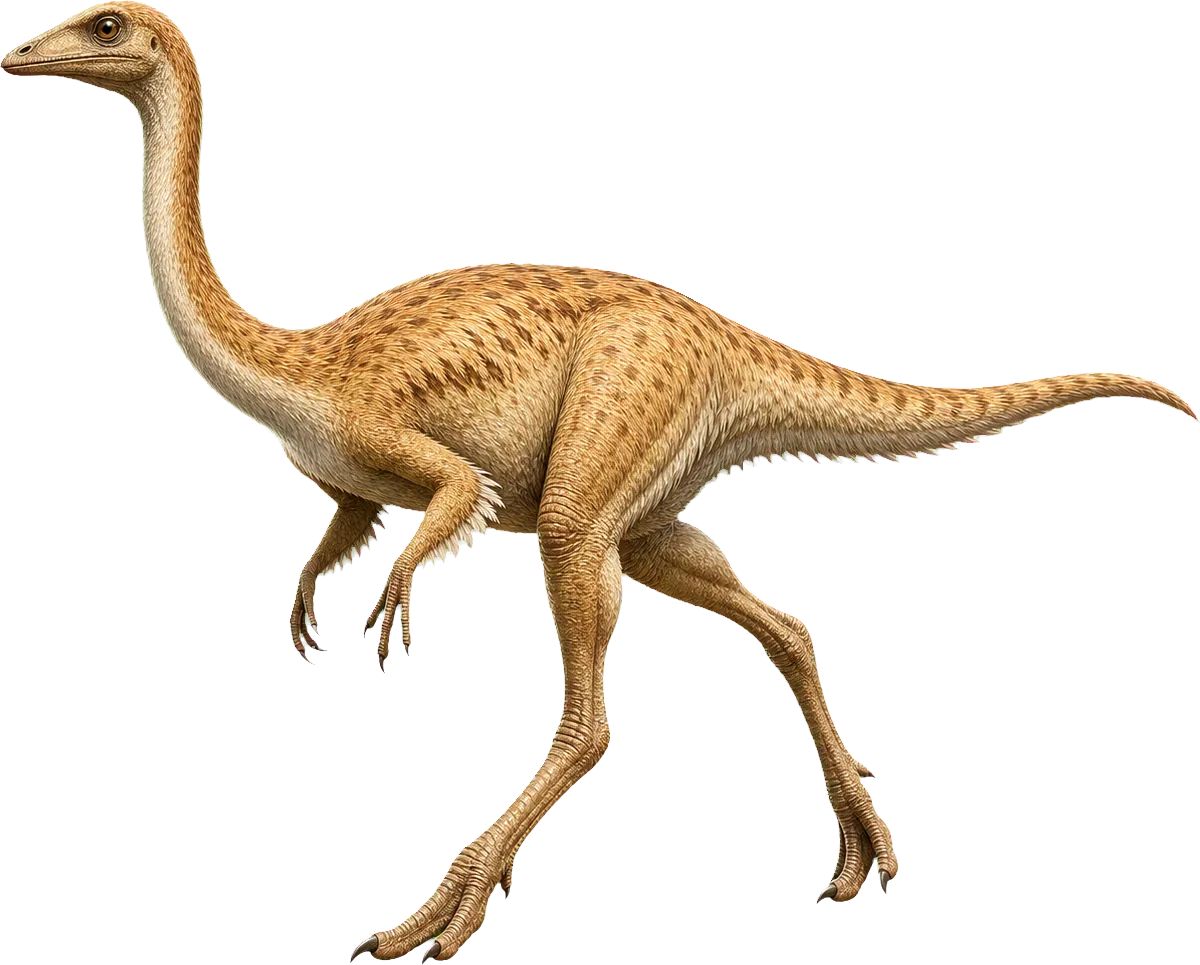
How large was Gallimimus
The height line shows the high-legged body. Length grows through neck, back, and tail.
Compare in the toolLook a little closer
More about Gallimimus
Short chapters for curious children and grown-ups who want to read along.
Gallimimus
Gallimimus means chicken mimic because some neck bones reminded people of chickens. The whole animal looked more like a giant running bird with a dinosaur tail and long arms. It lived in Late Cretaceous Mongolia, in the Nemegt Formation. Its mouth had no teeth, just a beak. Gallimimus was no horned fighter; its super trick was motion: long legs, light body, head forward, tail back.
Size
Gallimimus was about six meters long, one of the large ostrich-dinosaur relatives. It stood around two meters high, but much of the length came from neck and tail. The body stayed fairly light. Long arms ended in hands that were not tiny stubs. It did not look heavily armored; it looked like a dinosaur that wanted room to run.
6 m long2 m talllight body
Food
Gallimimus had a toothless beak. That beak could pick up different foods: plant parts, seeds, insects, and small animals all fit an omnivore life. It was not a big saw-toothed meat hunter. The head was small and light, the neck long. It could peck, snap, and move on without carrying much weight up front.
omnivoretoothless beaksmall head
Habitat
Gallimimus comes from the Nemegt Formation in Mongolia. This Late Cretaceous world had rivers, wetter places, and open ground. Other strange dinosaurs lived there too, including Therizinosaurus and oviraptor relatives. Gallimimus fits that landscape beautifully: a fast searcher that could cover ground instead of staying at one feeding spot.
MongoliaNemegt FormationLate Cretaceous
Protection
Gallimimus carried no armor, no horns, and no dangerous tail club. Its defense was speed. Long legs, a light body, and good balance helped it open distance. The arms could help with grabbing or searching, but around large predators, running mattered far more. Gallimimus shows a great rule: sometimes not getting caught is the strongest gear.
long legsno armorspeed
Movement
The body of Gallimimus was tuned for fast running. Long hind legs made big steps, the tail balanced the body, and the small head kept the front light. Exact speed numbers are hard, but the shape is clear. This animal was no stomper. It was a Cretaceous runner that could dash across open ground.
long stepsbalancing tailfast runner
Did you know?
Gallimimus means chicken mimic, even though it was much larger than any chicken. The name comes from bone similarities, not from a clucking animal. The nerd joke sits there: a large, toothless, long-legged dinosaur carries a name that sounds tiny. In real life, Gallimimus was one of Mongolia's standout runners.
chicken mimictoothlessMongolian runner
about 2 m tall
Beside a child, Gallimimus looks long-legged and long-bodied. It is not heavy like an armored dinosaur, but the legs tell you right away: this animal was built for motion. The tail pulls the line far back.
Keep reading
Related dinosaurs
Cretaceous
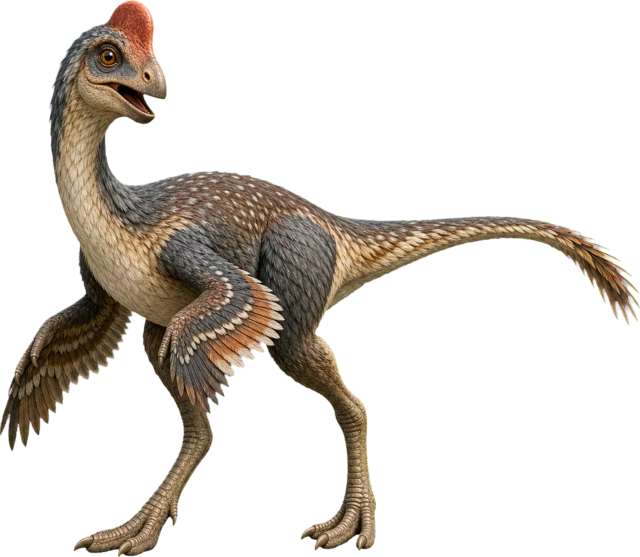
Oviraptor
Oviraptor was a beaked, bird-like dinosaur from Mongolia with an old name that now feels unfair.
Read about this dinosaur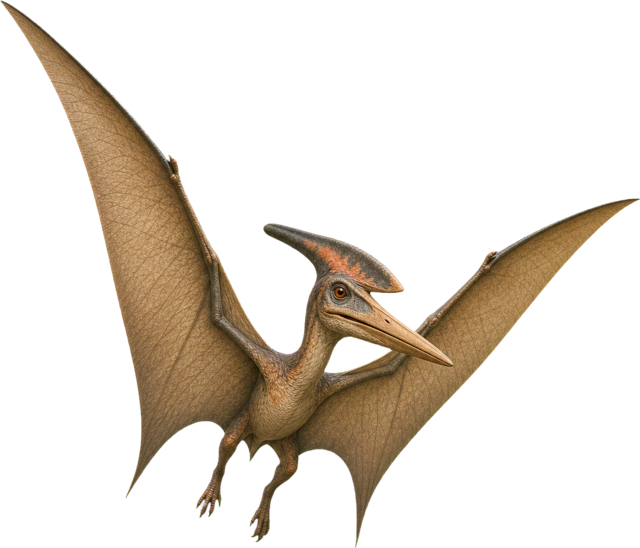
Cretaceous
Pteranodon
Pteranodon was a toothless pterosaur with a long beak, head crest, and huge wingspan.
Read about this dinosaur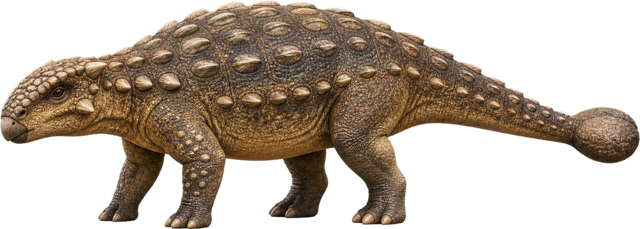
Cretaceous
Ankylosaurus
Ankylosaurus carried bony armor in its skin and a heavy club at the end of its tail.
Read about this dinosaur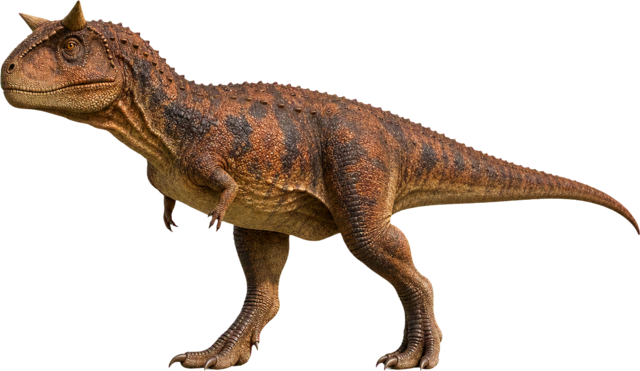
Cretaceous
Carnotaurus
Carnotaurus was a fast meat eater with short horns, extremely small arms, and fossil skin impressions.
Read about this dinosaurSources and review
How this page is checked
Names, periods, locations, diets, and size estimates are compared with museum and paleontology reference collections. Estimates are rounded and updated when the underlying content changes.
Last content review: June 22, 2026
Read our research method and sources