

Aquilops americanus
Aquilops for kids
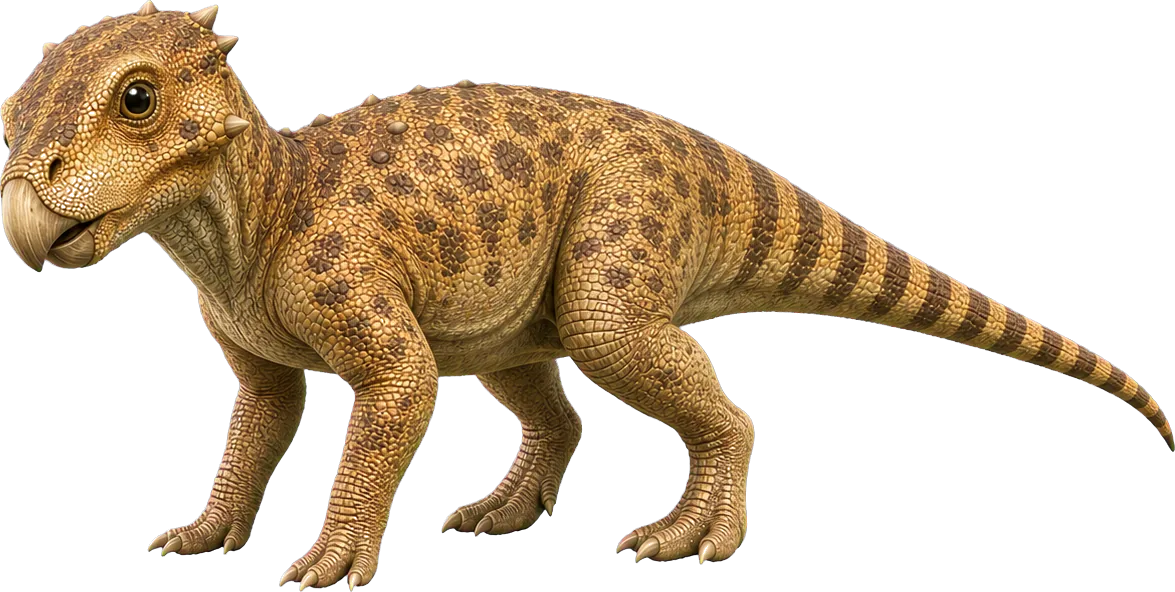
Aquilops was a small relative of horned dinosaurs, with a sharply curved beak at the front.
The essentials
What should you know about this dinosaur?
- Length: 0.6 m long
- Height: about 35 cm tall
- Weight: about 1 kg
- Food: Plant eater
- Time: Early Cretaceous
- Region: North America
How large was Aquilops
The height line is low because Aquilops stayed close to the ground. Its length is closer to a cat than a giant.
Compare in the toolLook a little closer
More about Aquilops
Short chapters for curious children and grown-ups who want to read along.
Aquilops
Aquilops is small, and the tiny size is the hook. This early relative of Triceratops had no big horns and no huge neck frill. Its best-known fossil is a small skull from the Cloverly Formation in Montana. At the front was a curved beak that reminded its namers of an eagle. Aquilops means eagle face. So picture its own little Cretaceous animal, not a tiny Triceratops copy.
Size
Aquilops was only about sixty centimeters long. Next to Cretaceous giants, tiny can still be useful. It slips between plants, needs less food, and can use cover. For the fossils, the skull is the star: only limited material, yet enough to show the curved beak and small horned-dinosaur relative shape.
0.6 m longvery smallskull known
Food
Aquilops ate plants. Its curved beak sat at the very front and could nip off small plant parts. Teeth worked farther back in the mouth. This was no treetop browser and no horned giant; it was a ground-level feeder. The neat detail is the beak: even this early relative carried a tool that later became famous in Triceratops.
plant eatercurved beaklow food
Habitat
The Aquilops skull comes from the Cloverly Formation in Montana. Those rocks belong to Early Cretaceous North America. The place was not like modern Montana; rivers, plant patches, and open ground shifted across the landscape. A small dinosaur could vanish among low plants. One little skull from an old rock layer was enough to bring a new name into dinosaur science.
MontanaCloverly FormationEarly Cretaceous
Protection
Aquilops had no Triceratops horns. Its safety looked quieter: stay small, turn quickly, disappear among plants. The beak looked sharp, but it was mainly a feeding tool. No armor plates covered the body. That plainness is part of the charm: an early horned-dinosaur relative before the family grew giant shields and horns.
no big hornssmall bodyquick turns
Movement
Aquilops was lightly built. Early relatives of horned dinosaurs often fit a two-legged walk and could also use the front limbs when needed. The tail helped with balance while the beaked head searched downward. Instead of heavy stomping, Aquilops feels like a quick little ground mover: quiet, low, and busy.
light bodylong tailground level
Did you know?
The best Aquilops fact fits in your hand: its famous skull was about lemon-sized. But that little fossil carries a giant story. Aquilops is one of the oldest named horned-dinosaur relatives from North America. It lived long before Triceratops, without big horns and without a huge frill. A small beaked skull from Montana says the horned-dinosaur line did not begin here as giants. Sometimes a huge dinosaur family starts with an animal about cat-sized.
lemon-sized skullbefore Triceratopshorned-dino relative
about 35 cm tall
Beside a child, Aquilops is truly small. Many dinosaurs tower over it, but the beak gives it instant personality. The picture shows a wonderful fossil lesson: a tiny skull can carry a big dinosaur idea.
Keep reading
Related dinosaurs
Cretaceous
Pachycephalosaurus
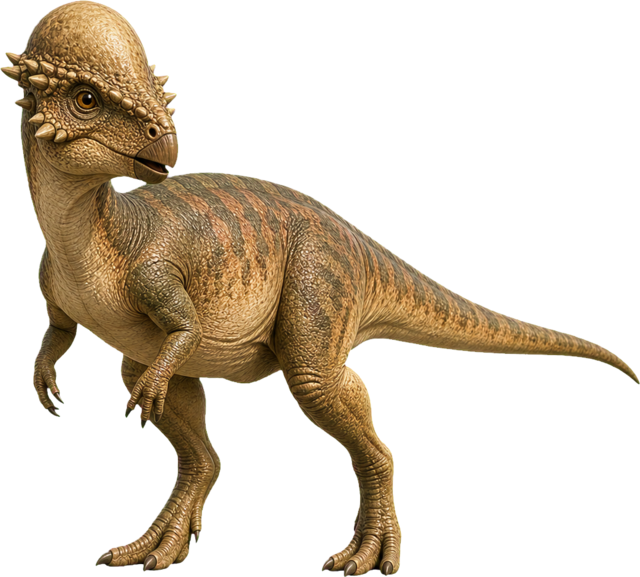
Pachycephalosaurus was a two-legged plant eater with a thick bony dome on its skull.
Read about this dinosaur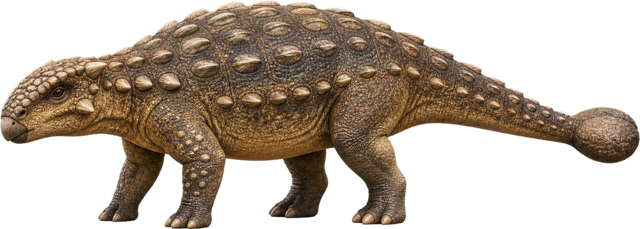
Cretaceous
Ankylosaurus
Ankylosaurus carried bony armor in its skin and a heavy club at the end of its tail.
Read about this dinosaur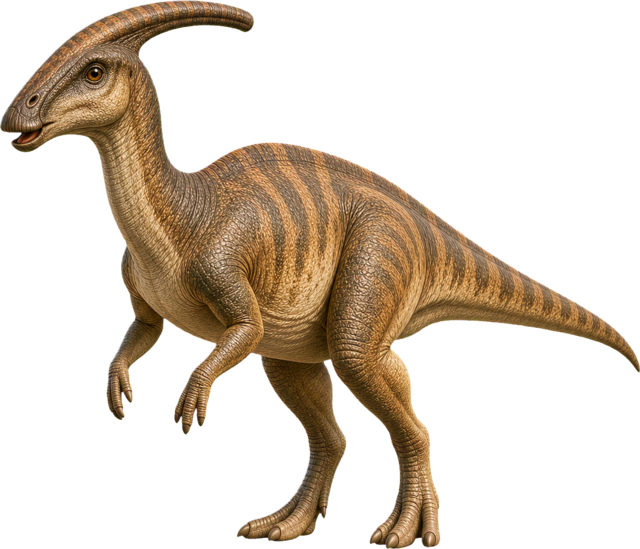
Cretaceous
Parasaurolophus
Parasaurolophus was a duck-billed dinosaur with a long hollow crest on its head.
Read about this dinosaur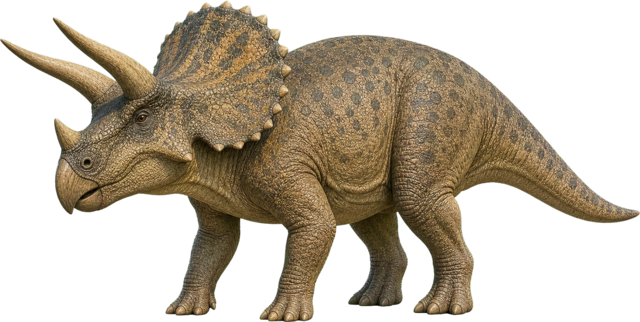
Cretaceous
Triceratops
Triceratops was a large plant eater with three horns, a neck frill, beak, and strong teeth.
Read about this dinosaurSources and review
How this page is checked
Names, periods, locations, diets, and size estimates are compared with museum and paleontology reference collections. Estimates are rounded and updated when the underlying content changes.
Last content review: June 22, 2026
Read our research method and sources