
Free coloring page
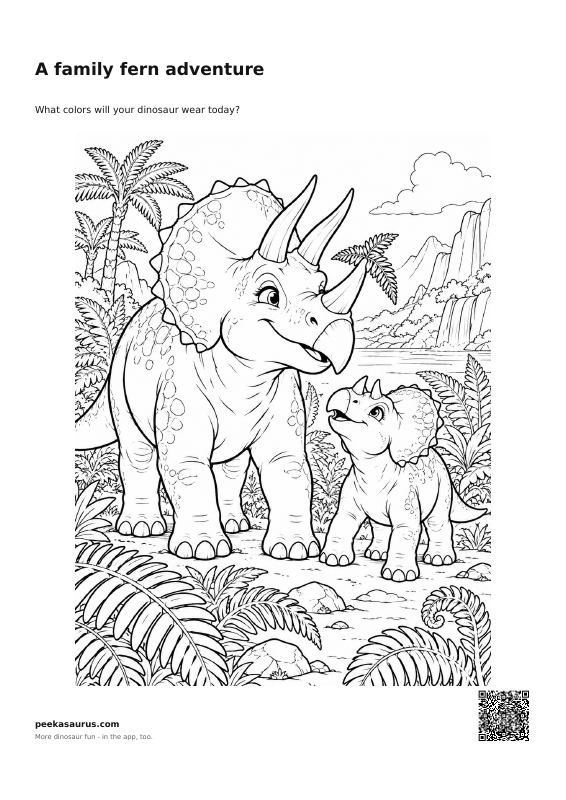
Triceratops coloring page
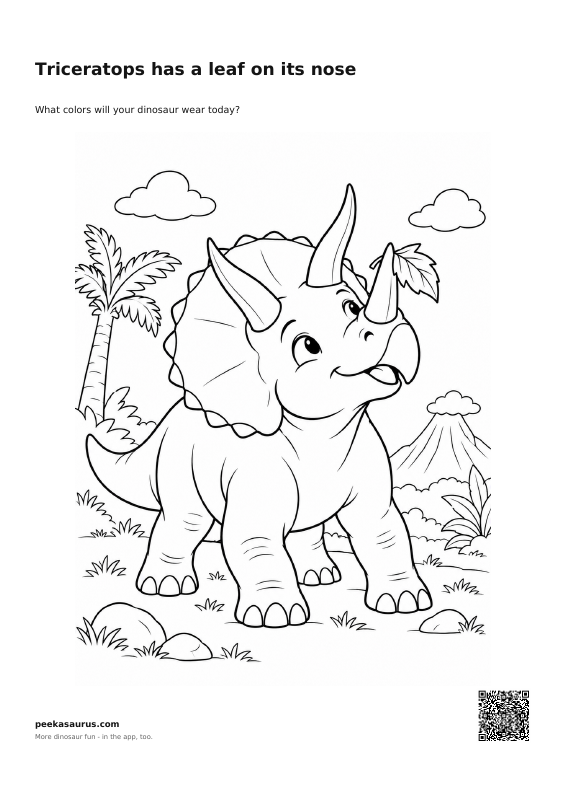
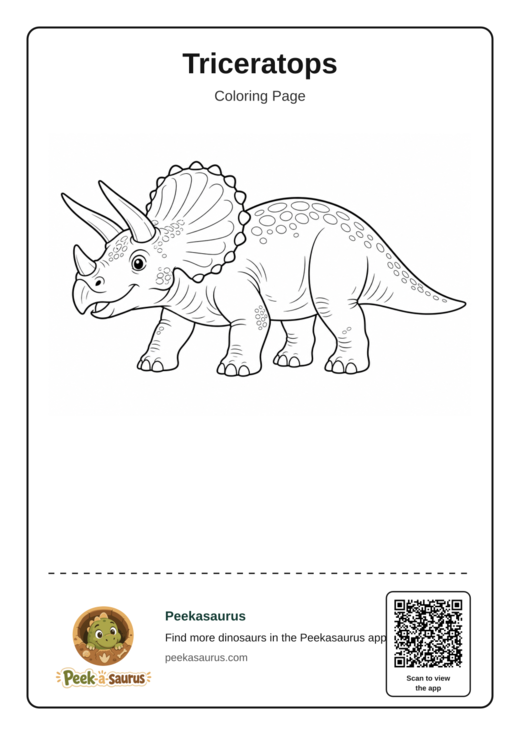
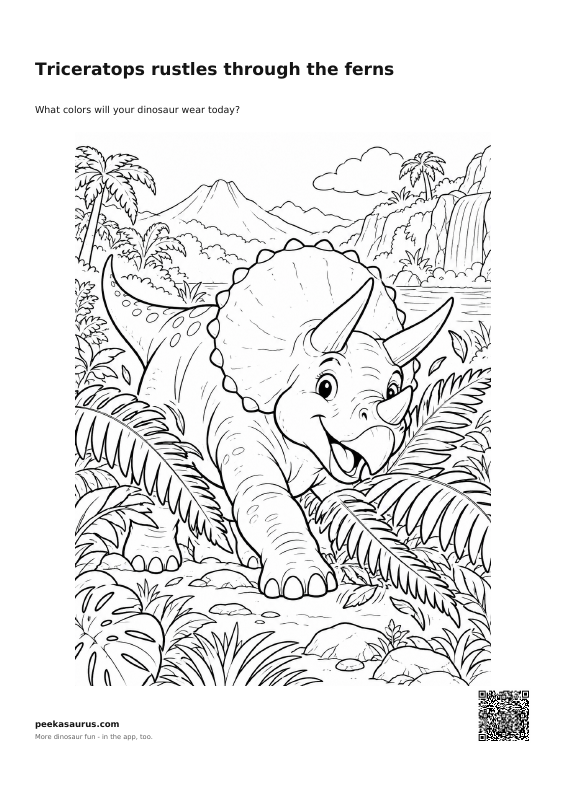
This free Triceratops coloring page focuses on the animal’s three horns and broad neck frill. The clear areas are manageable for younger children while leaving plenty of room for patterns and detail.
Ready for the printer
A full A4 coloring page.
The PDF is free for use at home, in preschools, and schools.
More coloring adventures with this dinosaur
Pick your favorite picture
3 pictures
That dinosaur is still hiding. Try another name or show all pictures.
At a glance
- Age
- Ages 3–7
- Time
- 10–20 minutes
- Difficulty
- Easy
- Format
- A4 PDF
You will need
Printer, paper, and crayons, pencils, or washable markers
Ideas for this printable
-
Find all three horns
Count the two long horns above the eyes and the shorter horn on the nose before coloring.
-
Decorate the frill
Give the neck frill a different color from the body. Spots, stripes, or repeating shapes make it stand out.
-
Add a herd
Draw more Triceratops heads or footprints in the background and decide whether the animals are travelling together.
What children practise
Large shapes are useful for practising controlled pencil movements. Counting horns, comparing long and short forms, and creating repeating patterns combine fine-motor work with early mathematical and descriptive language.
A dinosaur fact to share
Triceratops was a plant eater from the Late Cretaceous. Two long horns grew above its eyes and a shorter one sat on its nose. Its bony frill made the head look even larger. Scientists still discuss the different roles the horns and frill may have played.
Good to know
Frequently asked questions
What age is this coloring page for?
The large areas usually work well from about age three. Older children can add patterns, plants, and an entire herd.
What colors did Triceratops really have?
Its exact coloring is unknown. Earthy colors may look natural, but imaginative colors are just as suitable for this activity.